Maybe It’s Not Imposter Syndrome … Maybe It’s Just Leadership …

Recently I caught myself wondering something uncomfortable.

Am I actually performing at the level I expect from myself?
From the outside, things look fine. Projects move forward, decisions get made, responsibilities grow.
Yet occasionally there’s a quiet doubt: How high of a performer am I… or have I simply been fortunate with timing, opportunities, and the people around me?

A while ago I would probably have called that feeling imposter syndrome.
Today I’m not so sure anymore.

The illusion of certainty

Once you spend enough time in leadership environments, a few things become obvious.

First: Nobody has the full picture.
Second: Most important decisions are made with incomplete information.
And third: Confidence is often performative.

Many leaders project certainty long before they actually feel it internally.

At some point you realize something slightly uncomfortable: Most people are not executing a perfectly defined plan.
They are navigating complexity in real time.

That realization can be strangely liberating, but also humbling.

Vulnerability and leadership

In The Power of Vulnerability, Brené Brown describes vulnerability not as weakness, but as the courage to show up without guarantees.

That definition resonates strongly with leadership.

Because leadership rarely comes with guarantees.

You make decisions without having all the answers.
You move forward without knowing the full outcome.
And occasionally you wonder whether you’re really doing as well as people around you might assume.

Admitting that uncertainty can feel uncomfortable, especially in environments where leaders are expected to project confidence.
But pretending certainty where it doesn’t exist isn’t leadership either.
The trap high performers fall into….

Something else I’ve noticed over time.
Many high-performing professionals have a tendency to internalize outcomes too quickly.
When something goes wrong, the instinctive reaction is often:

“Where did I misjudge this?”

That instinct comes from ownership. And ownership is a good thing.
But it can also create a misleading equation:

Outcome = my judgment

Reality is more complicated.

Outcomes are shaped by systems: strategy, execution, people, timing, market conditions, and sometimes plain randomness.
Your judgment is only one variable in that equation.
Recognizing that doesn’t remove responsibility.
But it does create a more honest perspective on causality.

Decision quality vs. outcome quality

One mental shift that has helped me is separating decision quality from outcome quality.
A good decision can still produce a bad outcome if circumstances change.
A poor decision can occasionally work because of luck.

If we evaluate ourselves purely on results, we risk learning the wrong lessons.

A better question is:

Was the reasoning sound given the information available?
Did we execute well?
What changed externally?

Only after that does it make sense to question your own judgment.

Why leadership discussions often drift.

Another observation: Many meetings quickly drift toward operational details.

Which tool should we use?
Who owns the task?
What timeline should we set?

But those questions sometimes appear before the real problem has been clearly defined.
Organizations naturally gravitate toward action. Action feels productive.

Yet leadership often requires something different: stepping back and clarifying the problem first.

Sometimes the most valuable contribution in a meeting is simply asking:

What problem are we actually solving?
What outcome are we trying to achieve?
Is this even the right initiative?

These questions may sound simple, but they often change the entire direction of the discussion.

The uncomfortable transition

Looking back, I think many professionals move through three phases in their career.

Performer
“I must prove I’m capable.”

Expert
“I must know more than others.”

Leader
“I must make decisions when nobody knows.”

The transition from expert to leader is not always comfortable.
Expertise gives certainty. Leadership often removes it.
And perhaps that’s where the feeling people call “imposter syndrome” sometimes appears.

Not because someone is incapable, but because the job itself has changed.

A more honest question

The more I reflect on it, the more I think the real challenge of leadership is not eliminating uncertainty.
It’s learning to operate with uncertainty.

For me, the question has gradually shifted, even though I often struggle…

Instead of asking:

“Am I good enough for this?”

A more useful question might be:

“Given what we know today, what is the best decision we can make now?”

And maybe the real question for many of us is this:

Is what we call imposter syndrome actually just the feeling of stepping into responsibility that is bigger than certainty?

Strength Does Not Need Volume

In every professional environment, noise eventually emerges.
Doubt. Interpretation. Narratives that travel faster than facts.


It is not an exception. It is a constant.


Those who carry responsibility become visible.
And visibility invites projection.


Success is rarely judged on substance alone. It is filtered through perception.
That is not criticism. It is human nature.
In those moments, something fundamental becomes clear:


The difference between words and work.
Words can simulate weight.
Work carries real weight.


What is built on discipline, consistency, and measurable contribution
does not require defense.
It reveals itself over time.,.. in results, in continuity, in earned trust.


Leadership therefore asks something simple, though not easy:
Not to react to every signal,
But to keep building what endures.


Not everything loud is strong.
Not everything quiet is weak.


And between the two lies the difference
between noise
and strength.

How Fish Drown

I just finished the book ‘Hoe Vissen Verdrinken’. An insightful guide on how to make a workplace ‘brain friendly’.

‘Interrupted attention = stolen brainpower.’ This is the key takeaway!

NL-BE link

Useful information about team dynamics and individual needs to get the maximum potential out of an organization with a focus on organising the workplace.

Enjoyed reading it, was already aware of several concepts. However, this book brings it all together, blending theory and practice….

The Hidden Formula behind Change Failure


Seeing Change as a True Equation

I love the way this graphic expresses change management as a mathematical formula. It’s not just a metaphor—it’s a powerful diagnostic tool. Success equals Vision × Plan × Resources × Competencies × Culture. Because these factors multiply, a single missing or weak element drives the whole equation toward zero. That’s a striking reminder: you can’t “average out” a weakness in change management; you must strengthen every factor.


The Silent Zero: Competencies

The highlight on competencies as the “silent zero” is particularly insightful. Many organizations invest heavily in vision, plans, and resources, but fail to check whether the team really has the skills and experience to execute. This mismatch quietly undermines even the best strategy. In other words, competence gaps don’t make noise—they simply stop results from showing up.


Culture: The Multiplier of All Multipliers

While competencies may be the silent zero, culture is the invisible multiplier. A culture of openness, learning, and accountability amplifies every other factor. Conversely, a culture of fear or blame can neutralize even the strongest vision and plan. It’s not just a “nice to have”—it’s the fabric that connects all the terms in the formula.


Actionable Takeaway for Leaders

When launching a transformation, treat each element as an independent “checklist of zeros”:

  • Vision – Is it clear, inspiring, and shared?
  • Plan – Is it realistic and well communicated?
  • Resources – Are time, budget, and tools truly in place?
  • Competencies – Do we have or develop the right skills?
  • Culture – Does the environment support the change?

Ask yourself: Where could the hidden zero be?
Eliminate it early, and you give your change effort the chance to multiply instead of cancel out.

Arcade Games

I’ve always believed that the best way to learn is to dive in. I had never used a circular saw, designed a piece of furniture, or built an arcade machine — but I decided to take on the challenge.

When the original blueprints proved inaccurate, I started from scratch, adapting the design step by step. It became an exercise in curiosity, creative problem-solving, and learning entirely new skills from the ground up.

Generative AI to create a realistic picture

Probably have seen this on Facebook. Here is the prompt:

Create a vertical 9:16 hyper-realistic bust portrait of a man (referencing attached image) reimagined as a fusion between human and T-1000 Terminator. The bust is showcased inside a premium transparent acrylic display case with a brushed gunmetal frame. Half of his face and upper torso are human, with realistic skin texture, classic Terminator facial scars, a rugged jawline, and a piercing gaze. The other half transitions into polished, mercury-like liquid metal with flowing chrome skeletal structures, glowing blue LED eye, exposed circuitry, and biomechanical musculature beneath translucent synthetic skin.

He wears a futuristic, battle-damaged leather jacket and a metallic-textured undershirt torn to reveal integrated machine components. Lighting inside the case is cinematic: cool bluish tones casting dramatic shadows and metallic reflections. The base is a glossy pedestal etched with “TERMINATOR serif typography. The scene is set within a sleek, minimalist designer studio—white desk, soft shadows, and high-end ambient daylight, evoking an ultra-premium film memorabilia exhibit from a dystopian future.”

What Makes Your Brain Happy and Why You Should Do the Opposite

(2019-06-15)

Started reading this book. Interesting, however bit ‘holistic’ for my brain.. Will finish it eventually…

This book reveals a remarkable paradox: what your brain wants is frequently not what your brain needs. In fact, much of what makes our brains “happy” leads to errors, biases, and distortions, which make getting out of our own way extremely difficult. Author David DiSalvo presents evidence from evolutionary and social psychology, cognitive science, neurology, and even marketing and economics. And he interviews many of the top thinkers in psychology and neuroscience today. From this research-based platform, DiSalvo draws out insights that we can use to identify our brains’ foibles and turn our awareness into edifying action. Ultimately, he argues, the research does not serve up ready-made answers, but provides us with actionable clues for overcoming the plight of our advanced brains and, consequently, living more fulfilled lives.

Rolling out an A.I. algorithm in an organization

What is the main issue when you come up with a great A.I. case and try to implement it in the organization ? It’s getting buy in from the business and aleviating concerns and possible fear from the work force.

It even gets worse when decisions are taken by a machine and the algorithm dynamically assigns tasks to people. I’m experiencing this first hand, right now. Preparing the business is as hard as devising the deep learning algorithm and even more time consuming.

This is an interesting article:

https://www.infosys.com/insights/ai-automation/Pages/people-in-your-organization.aspx

(here is a copy)

Are People in Your Organization Ready for AI

“I see the movement towards AI and robotics as evolutionary, in large part because it is such a sociological leap. The technology may be ready, but we are not – at least, not yet.”

– Geoff Livingstone, President of Tenacity5 Media

As we adopt Artificial Intelligence (AI) and prepare for extensive automation of our industries, organizations and jobs for better revenue and efficiency, business leaders not only need to comprehend the intricacies of the technology but more importantly prepare well to answer questions around governance, employee engagement and people reskilling in an AI-enabled organization.


In a market research commissioned by Infosys, 64% respondents stated that their organization’s future growth is dependent on large-scale AI adoption, however, only 10% of them believed that their organization was currently maximizing the benefits of AI.

Source: AI Maturity Index study polling 1600 IT and Business Decision Makers across seven countries (USA, France, Australia, India, UK, Germany, and China) in November 2016.


Based on our experience with clients and a study of the pioneers, we believe a well-defined AI strategy must include organization change management as an important mechanism to prepare managers and employees both at the project level as well as at the organizational level to unlearn old ways of working and adopt to a more flexible, collaborative work environment through reskilling and upskilling.

The three key elements to consider in an organization change management strategy are:

Augment Leadership to Prepare for Tomorrow’s Management Practices

At the organization level: Every enterprise must develop an AI vision that its employees and leaders believe in. Leaders will play an important role in creating the right perception amongst employees about AI. Rather than view it as a threat, it must be seen as a tool that can amplify human potential. They also need to relook and redefine corporate ethics and code of conduct in view of the impact AI has on the various dimensions of an organization that include process, tools, culture and more. The four key management practices that the future managers need to adopt are:

  • Rely on AI as their source of truth for insights
  • Focus on problem solving using critical thinking
  • Collaborate across diverse networks
  • Think like designers to bring forth workable solutions

At the project level: Design thinking will play a very important role in bringing experimentation, empathy and in building models in a collaborative manner, enabling managers to dirty their hands by prototyping solutions that are built iteratively to discover failures faster in the lifecycle and achieve success with greater speed.

Empower Employees to Build Confidence in an AI-powered Enterprise

At the organization level: Employee orientation towards AI initiatives needs to begin at the ground level. While everyone realizes going the AI way is the way forward to growth in a digital world, the why and how of an AI strategy needs to be explicitly explained to everyone in the organization in order to align their individual activities with the bigger organizational AI aspirations. This will make employees see value in the work they do in the digital context. Employees should be encouraged to reflect on, define and build their future jobs in an AI-enabled organization by choreographing their own reskilling paths.

At the project level: Adopting a scenario-based approach can build employee confidence and ease interactions between machines/systems and human beings besides enabling testing and learning through pilot projects and proof of concepts.

Redefine Jobs & Enterprise Architecture to Enable New Forms of Collaboration

At the organization level: AI will flatten the organization and encourage seamless collaboration across functions where members from different business units will come together to solve new customer challenges in a flexible and fluid non-hierarchical set up.

At the project level: New roles that can build, train and interact with intelligent systems need to be defined. Training employees to take up these new roles will become an organizational imperative.

The Next Steps

If you are working on AI projects or considering implementing AI in your organization, prepare yourself well with the following key steps:

  • Define your AI vision and governance that everyone in the organization believes in
  • Revisit the operating models
  • Take ethical considerations prior to starting any AI initiative
  • Draw your HR/recruitment strategy to bring the talent you need for your new AI environment

The Hundred-Page Machine Learning Book

(2019-05-30)

A must read for ICT Managers to keep up with the latest trends. Even though you might have studied it at University. For me it has been a while…

Today’s top companies undergo the most significant transformation since industrialization. Artificial Intelligence disrupts industries, the way we work, think, interact. Gartner predicts that by 2020 AI will create 2.3 million jobs, while eliminating 1.8 million. Machine Learning is what drives AI. Experts in this domain are rare, employers fight for the ML-skilled talent. With this book, you will learn how Machine Learning works. A hundred pages from now, you will be ready to build complex AI systems, pass an interview or start your own business.

All you need to know about Machine Learning in a hundred pages

Supervised and unsupervised learning, support vector machines, neural networks, ensemble methods, gradient descent, cluster analysis and dimensionality reduction, autoencoders and transfer learning, feature engineering and hyperparameter tuning! Math, intuition, illustrations, all in just a hundred pages!

FlowForma helps us towards a paperless office

https://www.flowforma.com/news/imes-dexis-using-flowforma-process-automation


Source:
 FlowForma

FlowForma®, the leading provider of Process Automation tools for Microsoft Office 365®, today announced IMES DEXIS, is using its award winning FlowForma Process Automation tool to replace paper-based business processes and drive process efficiency.

Located in Hasselt, Belgium, the IMES DEXIS Group are a leading provider of industrial factory products in Belgium. Having recently acquired new cloud architecture in Microsoft Office 365® and Azure®, they looked to leverage a process automation solution to drive their digital transformation project throughout the entire organization.

As the business continued to expand, they knew it was time to bring its internal business processes online, to replace several previously paper-based processes. Through automating its workflows, employees will save time and benefit from greater visibility throughout the entirety of a process.

Upon seeing a demonstration of the FlowForma Process Automation tool, with its capability to allow external users and suppliers to input into its processes, the management team at IMES DEXIS knew it had the “wow factor” and were highly impressed.

“By utilizing the FlowForma Process Automation tool, IMES DEXIS will have end-to-end visibility of where its key processes lie. Ultimately this will result in increased transparency and data accuracy throughout the organization, not to mention a vast increase in productivity and efficiency levels for its employees,” said Keith Lally, Sales Director – Benelux Region, FlowForma.

Power of Vulnerability

(2018-09-30)

Have read the book. Very interesting to read and learned new ways to do stakeholder management, knowing what is the ‘normal’, understanding ‘fault & shame’..

This is really a ‘must read’

Is vulnerability the same as weakness? ”In our culture,” teaches Dr. Brené Brown, ”we associate vulnerability with emotions we want to avoid such as fear, shame, and uncertainty. Yet we too often lose sight of the fact that vulnerability is also the birthplace of joy, belonging, creativity, authenticity, and love.” On The Power of Vulnerability, Dr. Brown offers an invitation and a promise-that when we dare to drop the armor that protects us from feeling vulnerable, we open ourselves to the experiences that bring purpose and meaning to our lives. Here she dispels the cultural myth that vulnerability is weakness and reveals that it is, in truth, our most accurate measure of courage. 

IMES DEXIS celebrating 50 years

IMES DEXIS celebrated their 50 years of business and asked for some testimonials.

Why it’s so nice to work here

Please don’t mind the strange face I’m making. This is only the way I look for half of the day, the other part I’m sleeping…

ELK Stack & Business Architecture Performance Metrics

(2017-08-30)

My teams just finished up a proof of concept using ELK stack, proving trends and safeguarding business by exposing inefficiencies in mission critical environment and fixing it.

There is now pro active alerting when systems tend to fall or go in a diminished performance state before they actually do. Better alerting than standard server/services monitoring !

Big data analyses at its’ best.

Next step is creating a cluster for robust and intense computations…

If you’re working in a DevOps env. focus on business metrics is key. However, you want to derive those metrics and the data to support your meeting those key performance indicators using tools that support effective collaboration with a minimum of misery.

(2017-10-30)

Full blown ELK stack cluster implementation ready and in production

If you want to read more: https://www.elastic.co/what-is/elk-stack

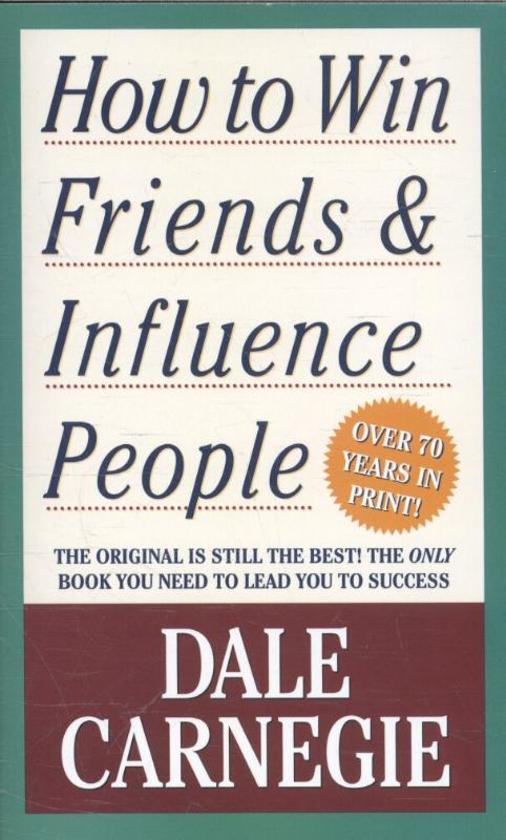
How to win friends and influence them

(2017-09-30)

This book really helped me in my current function/job. A great tool to understand people, what drives them, and how to interact with those that don’t see your point of view immediately

The most famous confidence-boosting book ever published; with sales of over 16 million copies worldwide!

Millions of people around the world have improved their lives based on the teachings of Dale Carnegie. In How to Win Friends and Influence People, he offers practical advice and techniques, in his exuberant and conversational style, for how to get out of a mental rut and make life more rewarding. 

His advice has stood the test of time and will teach you how to: 
– Make friends quickly and easily
– Increase your popularity
– Persuade people to follow your way of thinking
– Enable you to win new clients and customers
– Become a better speaker 
– Boost enthusiasm among your colleagues

This classic book will turn your relationships around and improve your interactions with everyone in your life.

Hybrid active/active VMWare data center with Huawei Network Systems

(2014/04/15)

Back in 2013, Huawei was not as well known in the SMB business as it is today. They really needed to get a foothold in the Benelux on that level. I was in need of a new local, small sized but performing data center. Huawei delivered a ‘no cure, no pay’ solution to handle traffic between the data nodes and the edge switches and the clients

Here is the case study:

An excerpt:

Brute Force Attack demonstrated

When I worked at a hospital, back in 2009 , I had trouble to introduce a basic security mindset with co-workers throughout the organization.

The term ‘think before you click’ and ‘safeguard your passwords’ was introduced, together with this video.

Here I devised a simple (single threaded) program on how to beat the Facebooks app Word Challenge.

When people looked at it, and when I showed them the firewall logs on how much we were targetted for hacking, an awareness was born.